What Makes an Offshore Container Different From a Standard Shipping Container?
If you’ve ever tried to use a standard shipping container on an offshore platform or marine installation, you’ll know quickly that it wasn’t designed for the job. The two look similar from a distance, but the engineering behind them — and the standards they’re built to — are worlds apart.
Here’s what sets a purpose-built offshore container apart, and why it matters for your operations.
Check out our range of Containers & Tanks
Built to a Different Standard
Standard shipping containers are designed for land and sea freight. They’re manufactured to ISO standards that govern their dimensions, stacking loads, and structural integrity during transport — but those standards weren’t written with crane lifts, wave motion, or dynamic loading in mind.
Offshore containers are designed and certified to DNV 2.7-1, the Det Norske Veritas standard for offshore freight containers. DNV 2.7-1 governs not just the structural strength of the container itself, but how it behaves during lifting, load transfer, and the kind of dynamic forces experienced during vessel operations and platform lifts. A container certified to this standard has been engineered and tested for exactly the conditions it will face offshore.
Lifting Points Are a Critical Difference
A standard shipping container is designed to be moved by forklift or by crane using spreader bars attached to its corner castings. These castings are adequate for static loads in controlled port environments — but they’re not designed for the dynamic, multi-directional loads of an offshore crane lift.
Offshore containers have purpose-engineered lifting points, designed and tested as part of the DNV certification process. These lifting points are rated for the specific dynamic load factors that apply when a container is being transferred from a supply vessel to a platform in open water — a genuinely hazardous operation where equipment failure has serious consequences.
Structural Integrity Under Harsh Conditions
Offshore containers are built to withstand corrosive marine environments, repeated handling, and the kind of rough treatment that comes with industrial operations. The frame construction, corner fittings, door hardware, and surface treatments are all specified for longevity in conditions that would rapidly degrade standard containers.
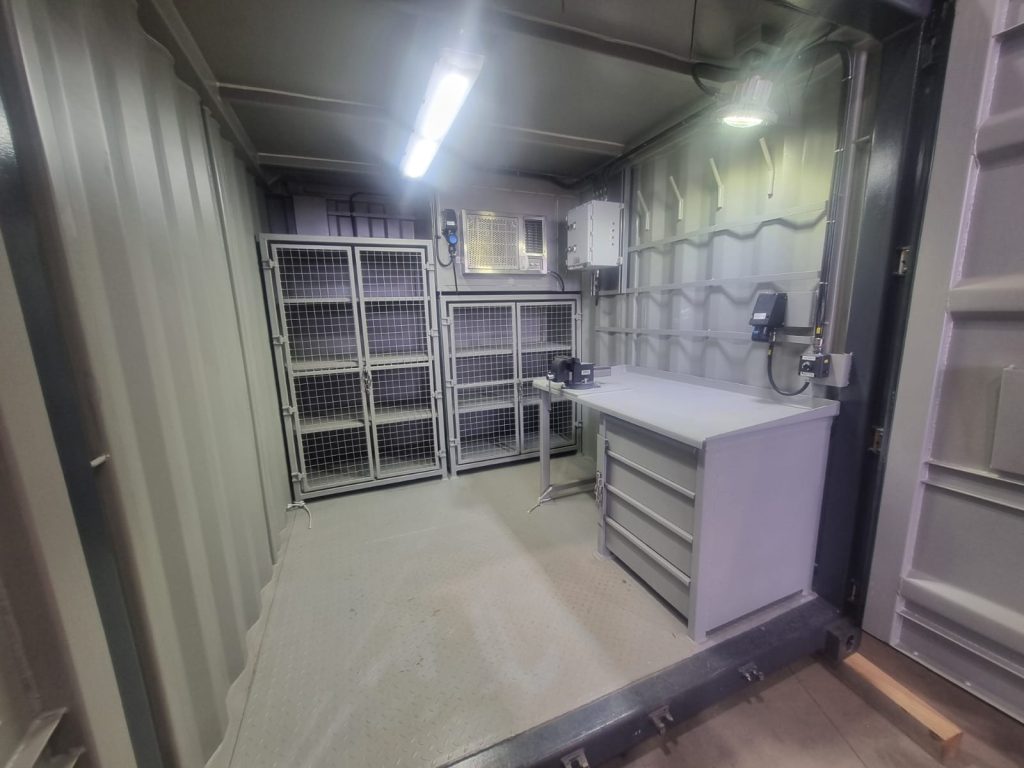
A 10-foot offshore container, like those available through EX Electrical & Rentals, is specifically sized for compact applications where space on a platform or vessel is limited — while still offering the structural integrity and lifting certification required for offshore use.
We have 10-foot offshore Zone 1 containers for rental
Why This Matters for Your Site
Using a non-certified container in an offshore environment isn’t just a compliance issue — it’s a crane lift waiting to fail. Offshore lifting operations are among the highest-risk activities in the oil and gas sector. The container, the lift rigging, and the lifting points all need to be rated for the job.
If your project involves offshore, marine, or elevated-risk industrial environments, the container you use needs to be designed and certified for that environment — not repurposed from a freight application.
Contact EX Electrical & Rentals to discuss offshore container rental for your next project.Paragraph 2